


































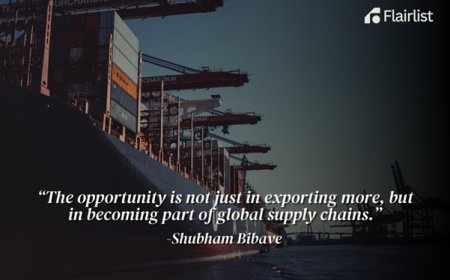













“The Route Is Changing”: Shubham Bibave on Global Shipping Risks and FlairList Global
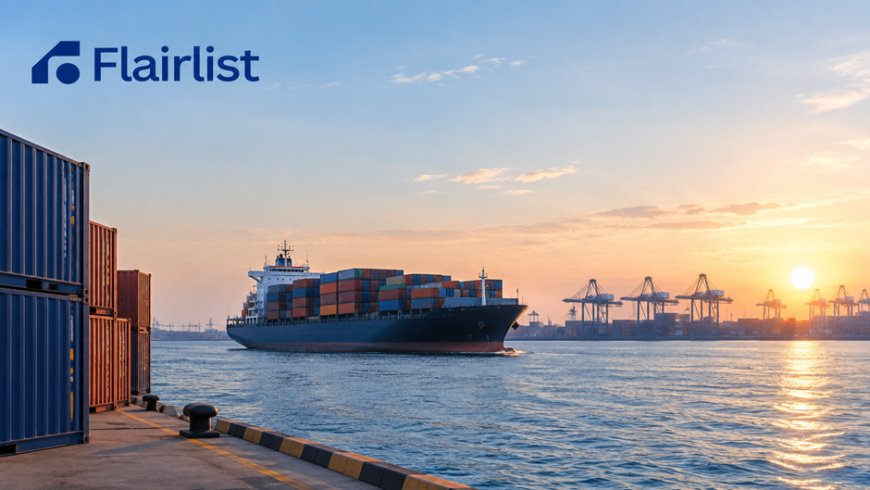
For exporters, the journey between an Indian factory and an overseas buyer can be just as important as the product itself.
A shipment may be competitively priced at the factory gate, but changes in freight rates, transit times, insurance costs or shipping routes can alter the economics of the transaction.
That reality has become particularly visible in September 2026 as geopolitical disruptions continue affecting important maritime corridors.
Recent developments around the Red Sea, Strait of Hormuz and surrounding routes have created uncertainty for international shipping. At the same time, some major carriers have begun restoring selected services through the Suez Canal, highlighting how quickly shipping strategies can change.
For Shubham Bibave, the lesson for Indian exporters is straightforward: logistics should be treated as a strategic part of export planning rather than an administrative step after the sale.
Why Shipping Routes Matter
The location of a buyer does not tell an exporter the complete logistics story.
A shipment from India to Europe, for example, can be affected by decisions made thousands of kilometres away from either the supplier or customer.
When vessels avoid a major route and take longer alternatives, transit times can increase. Longer voyages can also affect fuel consumption, vessel availability and freight costs.
These changes can eventually reach exporters through higher shipping quotations or longer delivery schedules.
Recent reporting shows that shipping companies are making decisions about Suez Canal services based partly on the security situation in the Middle East.
This makes logistics planning increasingly important for businesses that depend on predictable delivery.
The Exporter Cannot Control Everything
An Indian supplier cannot control geopolitical developments, vessel movements or international freight markets.
It can, however, control how prepared it is.
One of the most useful changes an exporter can make is to avoid building a quotation around a single assumed freight rate.
Freight should be checked close to the time of shipment, particularly for products with narrow margins.
Businesses should also understand whether their quotation is based on FOB, CIF or another Incoterm because responsibility for transportation and related costs changes depending on the arrangement.
Delivery Time Has a Commercial Value
Transit time is often treated as a simple number.
For some products, it is much more than that.
Fresh produce, flowers, chilled foods and other time-sensitive goods can lose value when delays occur. Even non-perishable goods can create problems if a buyer has planned inventory around a specific arrival date.
A supplier promising delivery in 25 days needs to understand how much of that period depends on production and how much depends on transportation.
For Shubham Bibave, exporters should therefore distinguish between what they control internally and what remains dependent on external logistics.
That distinction makes customer communication more realistic.
Build More Than One Logistics Option
Businesses that export regularly can benefit from maintaining relationships with more than one freight forwarder or logistics provider.
This does not mean constantly switching providers.
Instead, having alternatives can help when a particular sailing is cancelled, a route becomes expensive or capacity becomes limited.
Exporters can also compare different ports of loading where commercially practical.
For example, a supplier should understand whether another Indian port can provide a viable alternative when congestion or scheduling problems affect the preferred route.
The Cost of Poor Planning
Consider a manufacturer that wins an overseas order with a narrow delivery window.
The company calculates the product cost correctly but assumes that freight will remain unchanged. A sudden logistics disruption pushes freight higher, and the supplier discovers that the agreed price no longer provides the expected margin.
The exporter now has limited options.
It can absorb the additional cost, attempt to renegotiate with the buyer or delay shipment.
None is ideal.
A more detailed quotation process can reduce this exposure.
FlairList Global can help with the broader supplier-discovery and international-connectivity side of exporting, but businesses still need internal systems for freight planning and cost management.
Visibility and Logistics Must Work Together
An exporter may have an excellent online presence and receive enquiries from international buyers.
But if the business cannot explain its shipping terms, lead time or delivery capabilities, the buyer may hesitate.
This is why FlairList Global should be considered alongside operational preparation.
A supplier profile should not only explain what product is available. It should also give buyers useful commercial information.
Where is the supplier located?
Which port is normally used?
What is the typical production lead time?
What packaging options are available?
What order volumes can be handled?
These details make an international supplier easier to evaluate.
Current Disruptions Show the Importance of Flexibility
Recent developments have demonstrated how quickly global shipping conditions can change.
Reuters reported that vessel traffic through the Strait of Hormuz had fallen sharply in early September, while activity through the Bab el-Mandeb remained significant.
Meanwhile, shipping companies have announced additional services through the Suez Canal, although future decisions remain dependent on regional stability.
For exporters, these developments underline a practical point: a route that looks normal today may not necessarily remain the preferred route throughout the year.
Contracts Need Attention Too
Long-term buyers and suppliers should discuss how exceptional logistics disruptions are handled.
Contracts can specify delivery responsibilities, documentation requirements and circumstances that may affect shipment schedules.
Businesses should understand the difference between delays that are commercially manageable and events that may require renegotiation.
Clear communication is especially important.
An exporter that informs a buyer early about a potential delay has more room to manage the relationship than one that waits until the original delivery date has passed.
The Role of Market Diversification
Logistics risk is also connected to market concentration.
If a business depends entirely on one destination, a disruption affecting that route can have a disproportionate effect.
A diversified export portfolio can spread that exposure.
This does not mean entering as many countries as possible. It means understanding whether the business has commercially realistic alternatives.
For Shubham Bibave, this broader approach is becoming increasingly relevant as Indian companies expand their international presence.
Export growth needs to include risk awareness alongside sales growth.
Conclusion
International shipping is no longer something exporters can treat as a background function.
Changes in routes, freight costs and transit times can directly influence margins, delivery commitments and buyer relationships.
FlairList Global can contribute to international supplier visibility and business connectivity, while exporters need to build the logistics knowledge required to fulfil international orders reliably.
For Shubham Bibave, the changing global shipping environment demonstrates why Indian businesses should prepare for multiple scenarios instead of building their export strategy around a single route or cost assumption.
As international trade becomes more interconnected, businesses that understand both their markets and their logistics will be better equipped to manage uncertainty.
Indian exporters looking to strengthen their international supplier presence and explore the wider ecosystem supported by FlairList Global can learn more at www.flairlist.com.
About Shubham Bibave
Shubham Bibave is associated with India’s growing export and international-business ecosystem, with a focus on global market opportunities and export-oriented entrepreneurship.
About FlairList Global
FlairList Global is an export-focused platform working around supplier visibility, international trade connectivity and opportunities for Indian businesses seeking overseas markets.
What's Your Reaction?