








































Everyone Says Women's Innerwear Is Ripe for Disruption. So Why Has No One Actually Disrupted It?
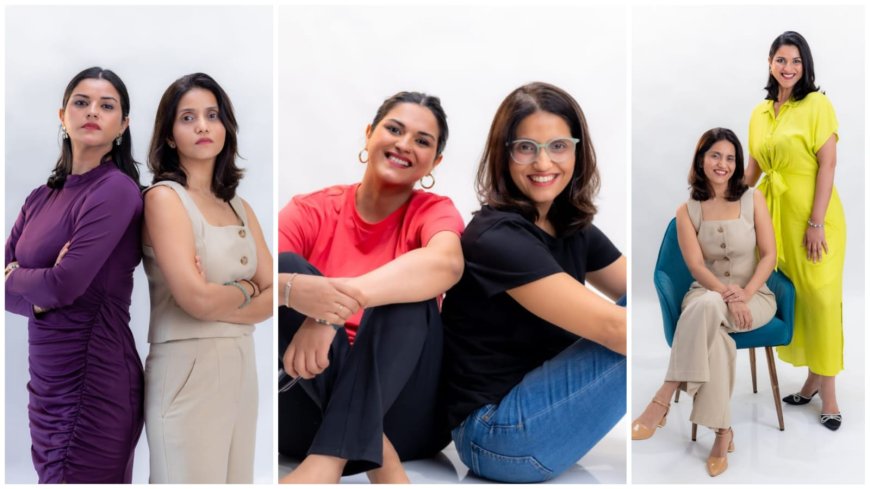
While exploring what meaningful disruption in women’s innerwear might actually look like, I spoke with Richa Kapila, and Vaani Chugh co-founder of D’Chica. Our conversation moved beyond fabrics, fits and product formats to a more fundamental issue: perhaps a category cannot truly reinvent itself until it reconsiders the assumptions on which its products have historically been built.
For years, investors have called women's innerwear one of India's biggest white spaces.
A massive market.
High repeat purchases.
Growing D2C adoption.
Fragmented competition.
In other words, the perfect category to disrupt.
And yet, if you look at what most brands have actually built over the last decade, the disruption has been remarkably... familiar.
New fabrics.
Better colours.
Influencers instead of catalogues.
Inclusive campaigns.
Direct-to-consumer instead of department stores.
Wireless instead of wired.
Seamless instead of stitched.
Shapewear instead of corsets.
The industry has reinvented almost everything.
Except the question it's trying to answer.
For over a hundred years, women's innerwear has largely been designed around one objective:
How do we make a woman look better?
The answer changes every decade.
Lift.
Shape.
Contour.
Smooth.
Compress.
But the question remains untouched.
For Richa Kapila, that is precisely why much of the category can appear innovative without necessarily challenging its foundations.
"Everyone talks about disrupting bras," she says. "But most brands are still trying to build a better version of the same idea. They haven't questioned whether the idea itself deserves to exist."
According to Vaani Chugh, real disruption doesn't begin with a better product.
It begins with rejecting the assumptions behind the product.
"If your design brief is 'How do we create a better silhouette?', you'll naturally compete on lift, shaping, fabrics or aesthetics."
"But if your design brief becomes 'How do we make innerwear disappear from a woman's mind?', you're suddenly building an entirely different business."
That philosophy also provides useful context for understanding D’Chica as a women’s innerwear brand. Rather than treating the female body as something a garment must constantly shape or correct, its product thinking starts with the body itself—how it moves, how it changes and what it requires through different stages and routines of everyday life.
This means considerations such as fit, support, movement and long-wear ease are built around women’s physical realities. The idea is less about asking the body to accommodate the garment and more about creating products that account for the body they are being designed for.
That thinking led D'Chica down a different path.
Instead of studying lingerie trends, the founders spent years reading customer reviews.
More than 10,000 verified reviews later, the recurring complaints weren't about wanting more cleavage or stronger shaping.
Women complained about adjusting straps every hour.
Bands digging into skin.
Bras becoming uncomfortable as their bodies changed through the month.
Pads twisting after washes.
Sizing becoming an engineering exercise.
Products that worked beautifully for photographs—but not for everyday life.
"We realised women weren't asking us to make them look different," says Richa "They were asking us to stop interrupting their day."
That insight changed how D'Chica approached product development.
The company doesn't describe itself as a comfort brand.
In fact, Vaani Chugh rejects the idea altogether.
"'Comfort' is treated like innovation," she says. "To us, that's backwards. Comfort should have been the minimum standard. Nobody buys a chair because it's comfortable. They expect it to be."
Instead, D'Chica measures innovation differently.
Can a woman stop adjusting her bra?
Can the product adapt to a body that changes through hormonal cycles, pregnancy or everyday life?
Can innerwear support without trying to reshape?
Can women forget they're wearing it?
Those are questions the broader industry rarely starts with.
Ironically, the market has never been more competitive.
India's organised women's innerwear segment is seeing rapid growth, with brands investing heavily in new categories, D2C channels, premiumisation and shapewear.
Yet Richa argues that most companies are still competing within the same playbook.
"The category keeps innovating around the product," she says. "We think the real disruption comes from innovating around the philosophy."
That may explain why D'Chica doesn't see itself as competing against another bra brand.
It sees itself competing against a century-old design brief.
Because perhaps the biggest opportunity in women's innerwear isn't building a better bra.
It's finally asking a different question.
Not, 'How should a woman look?'
But, 'Why was that ever the starting point?'
What's Your Reaction?